The UAE eInvoicing mandate: what’s coming and when

Parisse Pascual

The UAE is introducing a national eInvoicing mandate that will fundamentally change how invoices are issued, exchanged and reported.
While enforcement is phased, the timelines are now defined and the decisions businesses make over the next 12–18 months will directly affect how smooth or disruptive that transition becomes.
What is an eInvoice?
An eInvoice is a structured, digital invoice exchanged between a supplier and a buyer via an Accredited Service Provider (ASP), with the required data automatically reported to the UAE Federal Tax Authority (FTA).
PDFs are not eInvoices
Word documents are not eInvoices
Images, emails and scanned copies are not eInvoices
If it isn’t structured data that systems can automatically validate and report, it isn’t an eInvoice.
The UAE eInvoicing rollout: key dates and thresholds
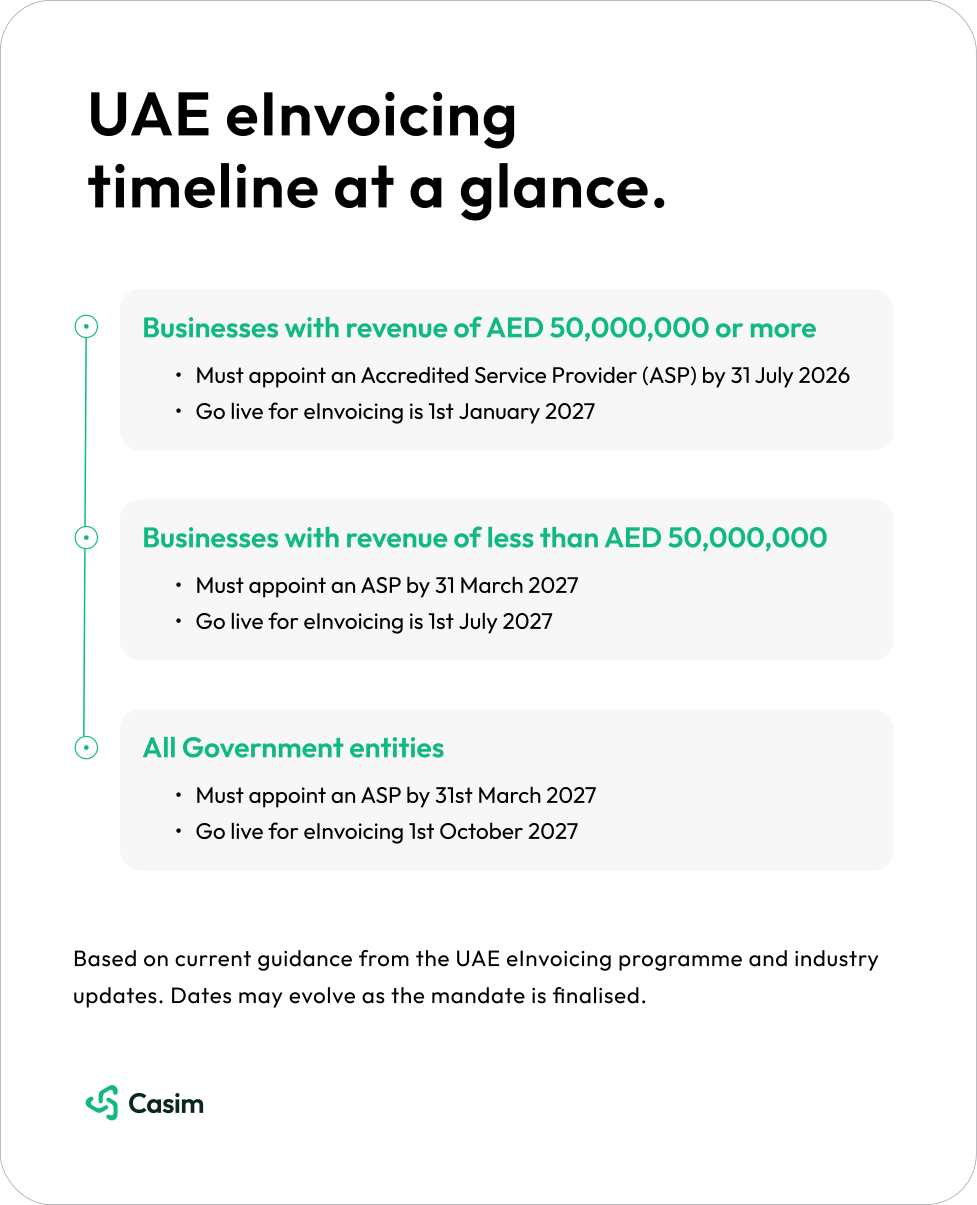
The UAE is taking a phased approach, starting with a pilot and moving to mandatory adoption by business size and sector.
Choosing an Accredited Service Provider (ASP)
Under the UAE model, every business must use an Accredited Service Provider (ASP), such as Casim, to issue and receive eInvoices. Direct submission without an ASP will not be permitted. Each phase includes a requirement to select an ASP ahead of go-live, giving time for integration and testing. For example:
Large businesses are expected to appoint an ASP by 31 July 2026, ahead of their mandatory date on 1 January 2027
Selecting an ASP is not just a compliance step, it determines how smoothly eInvoicing integrates with your existing finance and ERP systems.
What this means for businesses today
eInvoicing represents a structural change in how invoicing works. The shift is less about document format and more about how transaction data flows, how it’s validated and how compliance is delivered as part of day-to-day operations. Decisions made now will shape how smooth or disruptive that transition is as mandatory phases begin.
Early readiness focuses on:
Understanding how the mandate applies to your business
Assessing current systems and data flows
Choosing an ASP that fits your operating model
If you want a conversation about anything you’ve read above, please don’t hesitate to contact us for guidance.